Reasons to Visit an Endodontist
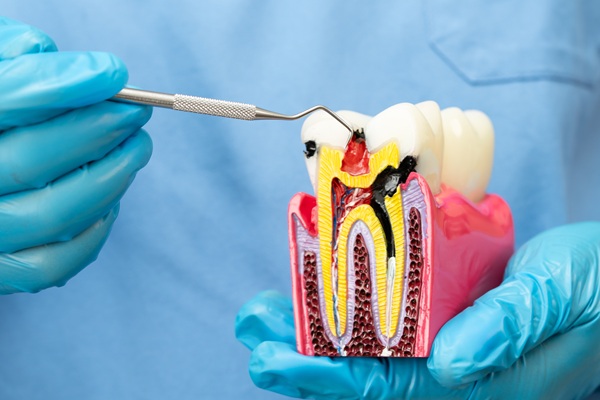
Dentists treat patients for tooth pain related to gum disease and cavities, but patients requiring root canals and other surgeries may be referred to an endodontist. These dental specialists perform procedures that remove bacteria, repair damaged teeth, and allow teeth to heal. Rather than replacing teeth, an endodontic surgeon focuses on preserving existing teeth and ensuring healthy development.
Diagnosing tooth pain
Patients experiencing extreme oral pain typically visit a general dentist for an initial diagnosis, but if the pain cannot be alleviated with standard procedures, the dentist may recommend an endodontist. Symptoms that can warrant endodontic treatments include:
- Teeth damaged from injuries
- Failed root canals causing pain
- Swelling near teeth
- Sensitivity to cold and hot liquids and food
Standard diagnostic equipment may not successfully identify the source of oral pain, but an endodontist can use highly advanced equipment such as fiber optic laminators and ultrasonic instruments to determine the true source of the problem.
Treating dental issues
Endodontic treatment may be required for a variety of oral health problems.
Dislodged teeth
Teeth can be moved out of place or pushed deeper into the gum line from a traumatic injury. A dislodged tooth requires immediate attention to prevent infection. The dental surgeon repositions the tooth, uses a splint to stabilize it, and examines the root to ensure its healing. Although minor dislodging may only require repositioning, severe cases usually involve a root canal.
Root canals
Some dentists can perform root canals, but endodontists receive additional postgraduate training after dental school and have more experience with the procedure. When tooth decay reaches the root, the diseased material must be removed to prevent further complications. A dental surgeon treats the infection by making a small hole in the crown and extracting the infected tissue. After the area is disinfected, the tooth is filled with gutta-percha (a plastic substance produced from a percha tree) to prevent further infection. A temporary cap is then inserted over the tooth to protect it while it heals. After the brief healing period, a permanent crown completes the procedure.
Root canal repair
Root canals are effective endodontic treatments that can allow teeth to function normally. However, a tooth repaired with a root canal can develop another infection that requires an additional procedure. Endodontists can treat the new infection and begin a new root canal to correct the previous surgery.
Primary teeth treatment
Unlike adult teeth, immature teeth are not fully developed. When a tooth injury occurs in a child, a dental surgeon treats the thinner root canal walls and open apex with an apexogenesis or an apexification procedure. The former involves coating the injured area with medication to promote healing and root growth. However, if the root canal walls do not harden, an apexification procedure is performed to remove the pulp tissue and harden the apex.
Conclusion
As an alternative to tooth replacement, endodontic procedures can repair injured or infected teeth and initiate healing. If you experience a dislodged tooth or severe pain, visit an endodontist for a diagnosis and a treatment recommendation.
Request an appointment here: https://omaha.advancedendotherapy.com or call Advanced Endodontic Therapy at (402) 506-7111 for an appointment in our Omaha office.
Check out what others are saying about our dental services on Yelp: Endodontist in Omaha, NE.
Related Posts
A root canal and apicoectomy are the two endodontic procedures that can save a tooth. Between the two surgeries, the root canal is the more common one. One will only get an apicoectomy if a root canal fails. If you want to know the difference between a root canal and an apicoectomy, here are the…
A chipped tooth, also known as a broken cusp, can be quite a common occurrence, but it is important not to ignore it. Whether it is caused by biting down on something too hard or due to a sports injury, leaving a chipped tooth untreated can result in further complications. Fortunately, many treatment options are…
Identifying a tooth abscess early prevents a painful infection from spreading and protects the long-term health of the smile and the surrounding jawbone. This type of dental concern often creates intense pressure, making it nearly impossible to focus on daily work or get a good night's sleep. That is why a professional evaluation remains the…
A natural, healthy smile is one of the most important aspects of maintaining oral health and personal confidence. Endodontics offers a way to preserve a natural tooth even when it becomes severely damaged or infected. Typically, an endodontist accomplishes this through root canal therapy. Whether you have been referred by a dental provider or are…